Intimacy After Prostate Cancer: Moving Forward When the Road Ahead Is Dark
ARTICLE
By Dr. Virgil Beasley, Psy.D.
12/30/20253 min read

There is a quiet moment that often arrives after prostate cancer treatment ends. The appointments become less frequent, the medical urgency softens, and from the outside it appears that life should be settling back into place. Friends and family breathe a sigh of relief. The crisis, they assume, has passed.
Yet for many men—and for the partners who walk beside them—this is precisely when uncertainty takes hold.
I often hear men say that they expected recovery to feel clearer once treatment was over. Instead, they find themselves unsure how to move forward, particularly when it comes to intimacy. Their bodies feel unfamiliar. Their confidence feels fragile. Questions linger without easy answers: How will my body respond? What will my partner expect? What happens if I try and fail?
These questions don’t announce themselves loudly. They accumulate quietly, and when left unspoken, they have a way of bringing movement to a standstill.
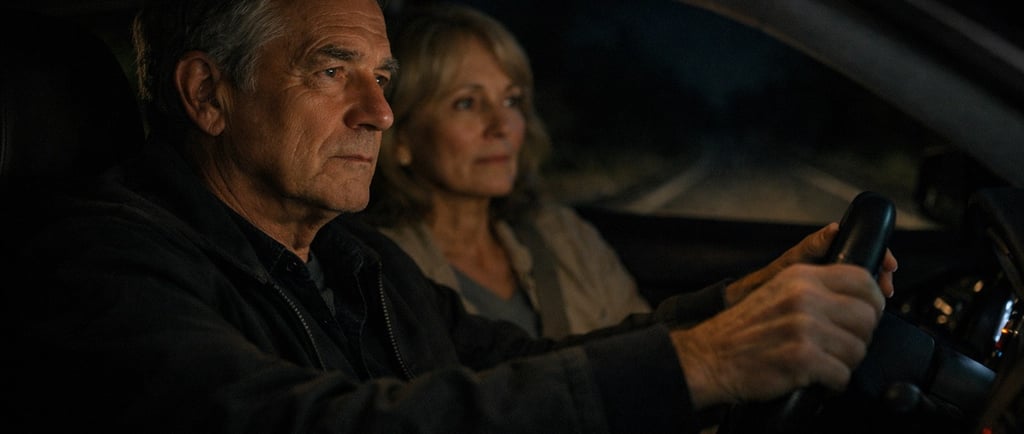
One image I return to often in my work is that of driving at night. Imagine being on a long, empty road with no streetlights, surrounded by darkness. You cannot see what lies miles ahead. You don’t know whether the road will curve, narrow, or surprise you. All you can see is what your headlights reveal—just enough of the road to keep moving forward.
That limited visibility does not mean you are lost. It simply means you are traveling in the dark.
This, in many ways, is what intimacy after prostate cancer feels like. Men often believe they must wait until they have complete clarity before re-engaging—clarity about function, desire, confidence, and outcomes. They assume they need certainty before movement. In reality, waiting for total reassurance often keeps them immobilized.
Prostate cancer does more than alter physiology. It touches identity. For many men, sexuality has long been intertwined with self-worth, masculinity, and emotional connection. When treatment changes sexual function, it can quietly undermine a man’s sense of who he is and what he brings into the relationship. Shame and fear slip in where confidence once lived. Withdrawal becomes a form of self-protection—not because intimacy no longer matters, but because it suddenly feels risky.
Partners, meanwhile, often sense this shift but don’t know how to respond. They want closeness, but not pressure. They want to help, but fear saying the wrong thing. They wait for signs that it is “safe” to move forward. And so both people pause, each trying to protect the other, while distance slowly takes root.
What is rarely said aloud is that clarity does not precede movement. It emerges from it.
Just as driving at night reveals more of the road as you move forward, intimacy becomes clearer through gentle, intentional action. An honest conversation. A moment of closeness without expectation. A willingness to stay present even when things feel uncertain. Each step illuminates what comes next. If a roadblock appears, it is encountered in motion, not in stillness—and that makes adjustment possible.
This is also where many couples discover that intimacy itself must be redefined. After prostate cancer, intimacy can no longer be reduced to performance or outcomes. It becomes slower, more deliberate, and more emotionally grounded. Touch carries different meaning. Desire may speak in a quieter voice. Connection often deepens, not because something was lost, but because something new is being formed.
The couples who navigate this chapter most successfully are rarely the ones who try to recreate the past. They are the ones who allow themselves to explore what closeness looks like now, without judgment or urgency. In doing so, many find a form of intimacy that is more honest, more communicative, and more resilient than before.
None of this requires having all the answers. It requires trust—trust in the process, trust in one another, and trust that forward motion, even when tentative, is better than standing still in the dark.
And it is important to say this clearly: no one is meant to take this journey alone. Sometimes what’s needed is not a solution or a technique, but reassurance. A place to speak openly. A conversation that helps make sense of what is happening emotionally and relationally. Often, seeing just a little farther down the road is enough to restore confidence and momentum.
Healing after prostate cancer is not about certainty. It is about movement. It is about continuing forward even when the destination is not fully visible, trusting that the road will reveal itself as you go.
—
Dr. Virgil Beasley, Psy.D.
Clinical Psychologist | Prostate Cancer Survivor
If these reflections resonate, and you find yourself needing reassurance or a place to talk things through, my door is always open. Sometimes a single, thoughtful conversation is enough to help you regain your bearings and continue the journey with greater confidence.